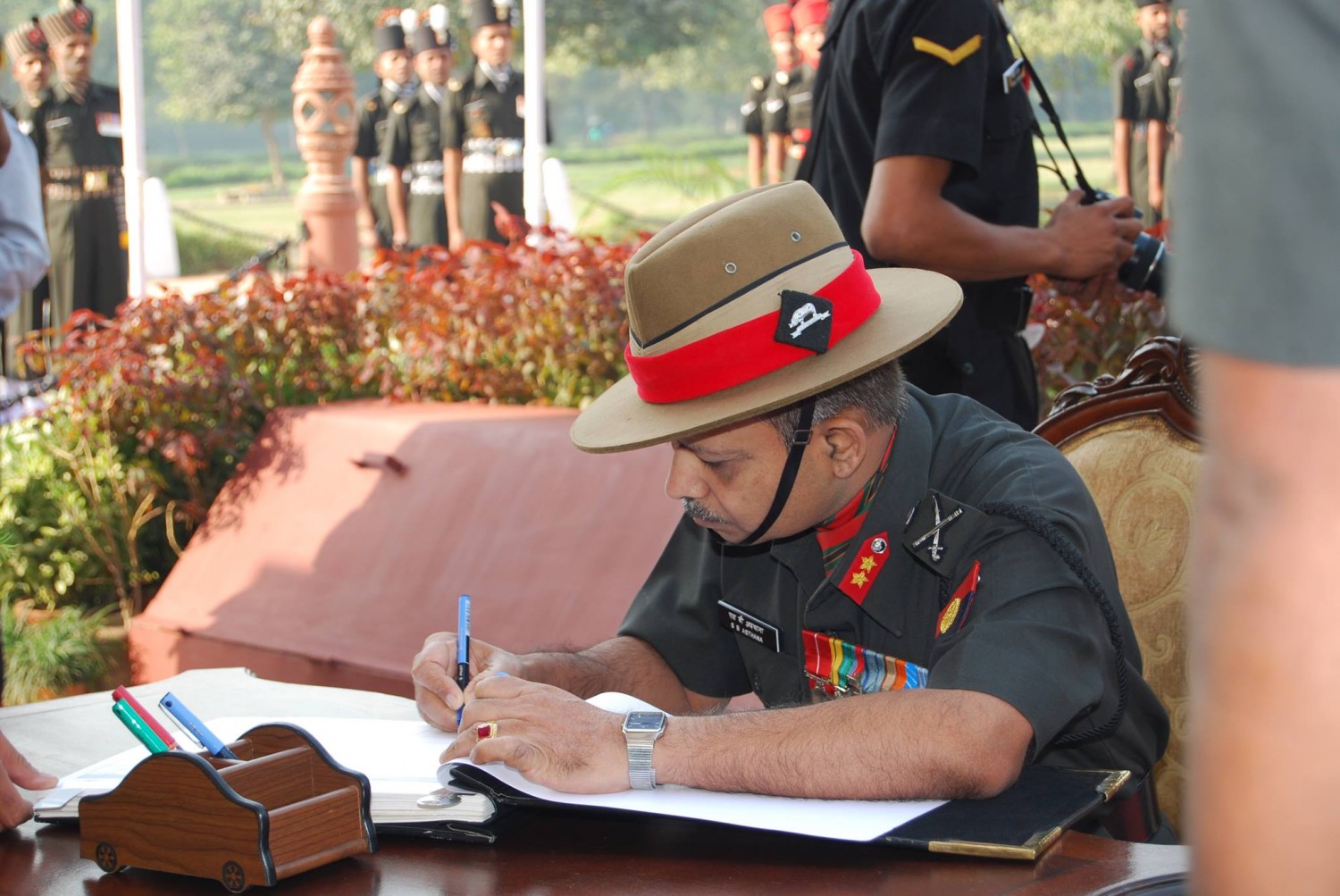

Interview: Major General Dr S B Asthana,SM,VSM,PhD(Veteran)
Sharing an interview of mine by Foreign Policy Research Centre (FPRC), India on the subject related to India’s position between Russia and China in RIC Format. The interview was published in FPRC Journal, New Delhi, India, 2025, ISSN 2277 – 2464. For the benefit of readers the Interview is reproduced below.
“India envisions the SCO as a platform for regional security without being anti-West. India considers itself as part of Global South, which is ‘Non West’ but not ‘Anti West”.

FPRC Journal-63- Focus: India between Russia and China (RIC)
Interview: Major General Dr S B Asthana,SM,VSM,PhD(Veteran)
FPRC
Modi, flanked by Putin and Xi Jinping, at the SCO Meet (31 August 2025), highlights the centrality of India in global geopolitical dynamics in 2025. Do you agree?
Major General Dr S B Asthana
I agree and believe that India has a pivotal role in the world’s geopolitical dynamics in 2025 is evident in Prime Minister Modi’s attendance at the Shanghai Cooperation Organisation (SCO) Summit on August 31, 2025, alongside Presidents Putin and Xi Jinping. Before I go into further detail, allow me to briefly outline the geopolitical landscape for 2025.
2025 started with extension of Cold War 1.0 between US led NATO and Russia under Joe Biden. Cold War 2.0 between USA and China was on, although the West wasn’t pushing too hard for it due to their engagements and obsession in Europe and Middle East.
President Trump, with his MAGA obsession and tariff war has ignited both Cold Wars despite talking peace and regenerated western expectations of posing difficult choices for countries not in Big Power Contestation to an extent that ‘either you are with us or against us’. India too has been impacted by it. This attitude of USA has inadvertently established two blocks i.e. one being USA led West and other of China, Russia, Iran North Korea.
There is a push for regional groups like the SCO as an alternative to address at least some of the regional situations because global organisations like the UN are unsuccessful at solving significant global issues. India is positioned to engage in various engagements and obtain the best of both sides in the interest of the country under these circumstances. India’s centrality in multilateral institutions is justified by the fact that it is the most populous country, has the fourth largest and fastest growing economy, and has a sizable consumer market. As such, it is relevant enough for both opposing blocs to want to keep India on their side. In spite of this, India, the only democratic country among these major blocs, continues to play a crucial role in the dynamics of global power.
India’s Geopolitical Centrality
India’s engagement at the SCO Summit underlines its role as a key player bridging the interests of China and Russia, as well as representing the larger Global South.
Despite border tensions with China and U.S. tariff pressures under President Trump, India’s ability to participate as a relevant player with both demonstrates its unique global positioning and growing influence.
Prime Minister Modi’s repeated emphasis on peace, counter terrorism and connectivity, China’s Xi Jinping call for partnership, not rivalry, while regional security remaining a priority for Russia in the context of SCO, brings all the three major players together, more so when President Trump has aggressively launched tariffs/sanctions & trade war on each of these countries.
Strategic Autonomy and Multi-Alignment
India continues to exercise strategic autonomy, forging its path between great powers instead of aligning exclusively with any bloc.
As a member of diverse groupings like SCO, BRICS, and the Quad, India demonstrates diplomatic maturity, outreach and maintains productive relations with both Western powers and Eurasian rivals.
The trilateral optics with Putin and Xi reinforce India’s independent foreign policy, balancing trade, security, and regional stability interests.
Significance of the 2025 SCO Summit
This is Prime Minister Modi’s first official visit to China in seven years, highlighting an attempt for reset and fresh opportunities in Sino-Indian relations.
India uses the SCO to further energy security, connectivity with Central Asia, and counterterrorism cooperation, especially through platforms like the Regional Anti-Terrorist Structure (RATS).
India’s presence in SCO also ensured that no joint statement adversarial to Indian interest is passed, despite such efforts made by some countries. Some accommodation by China in letting Pahalgam and LeT appear in joint text in 2025 Summit was seen as a positive accommodation by China.
Global Implications
India’s posture at the SCO reveals its ambition to be a player of significance in the emerging multipolar world order, not merely reacting/following the agendas of others.
It is noteworthy that by directly engaging with both Xi and Putin, and being publicly seen as flanked by them, Modi signals India’s importance as a moderating and balancing force amidst growing global fragmentation and big power contestation for spheres of influence.
Finally, the SCO summit visuals and diplomatic outcomes strongly affirm India’s pivotal position in global geopolitics in 2025, highlighting its successful strategy of multi-alignment, regional leadership, and strategic autonomy.
FPRC
How far do you agree with the view that China, Russia, and India are quietly sketching the plumbing of a usable alternative to the Western order?
Major General Dr S B Asthana
I would argue that China, Russia and India are increasingly working together to pursue their respective national interest and certain issues of common interest like turbulence in trade caused by Trump Administration. However, rising influence of certain common groupings like SCO and BRICS is influencing US led West to speculate as if it’s a rise of usable alternative to the Western order. Some of the indicators of rising influence are given in succeeding paras.
Institutional Moves and Cooperation
With programs like the proposed SCO Development Bank, cooperative counterterrorism mechanisms, and infrastructure projects, the SCO and BRICS expansion demonstrate continuous attempts to improve Eurasian and Global South cooperation outside of conventional Western-led frameworks.
In contrast to perceived Western dominance and conditionality, these countries assert that they support a multipolar order based on sovereignty, non-interference, and mutually beneficial partnerships.
The 2025 SCO Summit in Tianjin certainly saw calls for better financial systems, energy cooperation, and expanded institutional platforms as alternatives to Western financial institutions like the IMF and World Bank.
Strategic Convergence and Differences
Although no one says it, but it appears that China and Russia consider organisations like the SCO as alternatives to NATO and the Western security architecture. However, India continues to pursue a policy of multi-alignment, strengthening its links with the West (such as being part of the Quad), while strengthening its ties with Eurasia. This suggests that India is reluctant to completely replace the Western order but rather wants to create a more balanced multipolar system, not dominated by any single power.
Although, the cooperation is growing, but there remain substantial differences in vision and approach among the three, particularly regarding global leadership, spheres of influence, and values.
Multipolarity Rather Than Bloc Politics
Instead of the formation of a strict anti-Western bloc, the trend is towards a flexible, networked multipolarity. Targeting pragmatic necessities like commerce, infrastructure, technology governance, and energy, the alternative order getting developed gives developing countries disenchanted with Western hegemony a choice.
India’s emphasis on “One Earth, One Family, One Future” echoed at the SCO highlights a vision for inclusivity, sustainability, and reformed global governance, rather than a direct challenge to the West. “India envisions the SCO as a platform for regional security without being anti-West. India considers itself as part of Global South, which is ‘Non West’ but not ‘Anti West”.
China, Russia, and India may seem to be developing certain mechanisms of an alternative to the Western order, but their approach seems incremental, adaptive, and rooted in multipolarity, not a direct or unified opposition to the West.
FPRC
What are the implications of the revival of RIC for the geopolitics of South Asia?
Major General Dr S B Asthana
The trade and geopolitical turbulence caused by Trump administration has given rise to speculations of revival of the revival of the Russia–India–China (RIC) format, more so after SCO Summit of 2025. It has significant implications for the geopolitics of South Asia.
Historical Context of RIC
In the late 1990s, when Russia was looking for alternatives to Western-dominated geopolitics and a counterbalance to US global influence, Russian Prime Minister Yevgeny Primakov originally conceived up the RIC framework. With the aim of fostering strategic communication and collaboration on security, global governance, economic integration, and multipolarity, the grouping was formally established in 2002 with the start of regular trilateral ministerial-level meetings. The RIC nations have since convened over 20 times at different levels.
Viability and Current Status
Despite accounting for approximately 33% of the world’s GDP and 19% of its landmass, the grouping’s sustainability is threatened by persistent tensions between China and India, particularly after the 2020 confrontation in the Galwan Valley, which caused the format to go into dormancy for five years. Citing indications of border de-escalation and an increasing need to resist Western influence (particularly US tariffs and sanctions), Russia has recently advocated for the resuscitation of RIC. India is still cautious, though, striking a balance between strengthening Western ties and maintaining strategic autonomy. Trilateral dynamics are further complicated by Russia’s growing reliance on China.
Geopolitical Impact in South Asia
Enhanced Dialogue and Crisis Management: RIC functions as an informal mechanism for communication between India and China, which can help in mitigating border tensions and competition.This trilateral forum can help preventing escalation of conflicts by offering a platform for dialogue and crisis management, supporting regional stability in South Asia.
Counterbalance to Western Influence: Recently, South Asian countries have seen a trend of regime changes precipitated by violent protests, some of which are alleged to be indirectly supported by Western agencies. Bangladesh saw a leader parachuted from USA, governing the country without elections. The RIC revival can provide South Asian states some viable alternatives to Western-centric policies and partnerships.,avoiding becoming an arena for proxy battles in a new era of Big Power Contestation.
Economic and Connectivity Opportunities: If leveraged properly, RIC could promote regional growth through investment in connectivity, infrastructure, and trade, creating new opportunities for South Asian economies. It could also enhance energy cooperation, logistics networks, and technology exchange benefit both South Asia and the broader Eurasian region.
Security Collaboration: RIC presents opportunities for joint action against terrorism and transnational organized crime, which remain significant threats to regional stability in South Asia.Shared concerns over extremism enable more robust and coordinated responses in the region.
Enduring Limitations
Deep strategic mistrust between India and China, especially due to China’s ties with Pakistan and ongoing border disputes, continues to constrain the full realization of RIC’s potential.
There are risks that the RIC format, without tangible cooperation, could devolve into a rhetorical platform rather than a substantive mechanism for reconciliation or transformation in South Asia.
The revival of RIC in 2025 provides South Asia with new avenues for diplomatic engagement, economic collaboration, and security cooperation, while helping to create a more balanced and multipolar regional order. However, progress will depend on the ability of India, China, and Russia to manage their mutual suspicions and conflicting interests.
FPRC
Indian, Russian, and Chinese warmth seen during the SCO Meet masks gaps and contradictions in their bilateral relations. Do you agree?
Major General Dr S B Asthana
The displays of warmth and solidarity between Indian, Russian, and Chinese leaders at the SCO Meet drew limelight beyond proportion due to tariff threats of President Trump and his resolve to impose his supremacy over BRICS countries. It certainly concealed gaps and contradictions in bilateral relations amongst these countries, specially India and China.
Surface Diplomacy vs. Real Differences
The SCO summit showcased public gestures like hugs, shared rides, and joint declarations, framing an image of strategic camaraderie. However, the optics masked some unresolved tensions, such as India’s border disputes with China and India’s discomfort with the China-Pakistan nexus, especially in Operation Sindoor. India’s decision to skip China’s military parade attended by Putin and Xi, subtly signalled Indian accommodation to Japanese sensitivities.
Fundamental Contradictions
- India’s divergent stance on issues like the Belt and Road Initiative doesn’t suit China. India views China Pakistan Economic Corridor as breach of its sovereignty and territorial integrity and refuses to sign any document in any common multilateral forum, which endorses BRI.
- While India is pursuing a policy of strategic autonomy and multi-alignment (including engagement with the US and Quad), China does talk of multipolar world but its actions indicate its desire to become second pole to USA and build a China centric Asia.
- Economic and energy cooperation has drawn India and Russia closer, especially after Western sanctions on Moscow, but simultaneously, Russia and China have deepened their strategic partnership to no limit, sometimes disturbing some strategists in India. Although, Russia has been matured enough not to play China against India or vice versa. In fact on issues of controversies between India and China, Russia has either kept quiet or tried to mitigate it.
- Persistent disagreements over terrorism (such as China’s reluctance to list UN designated Pakistan based terrorist) reflect underlying gaps in threat perception and shared values. Chinese support to Pakistan in Operation Sindoor and continued supply of military hardware and intelligence is also a cause of strategic and security concern to India.
Although the SCO and RIC formats offer forums for communication and cooperation, they are unable to completely address or overcome these bilateral conflicts; the inconsistencies are maintained/managed because Article 2 of the SCO charter itself forbids meddling in such affairs. Policy differences are nevertheless exist, even though strategic optics portray unity against Western domination. All of these Non-West forums will gain more traction to lessen their differences and face the Western challenge together, if the Trump-led Western world keeps pushing the Non-West for economic subjugation.
FPRC
How does the Trump administration view images at the SCO Summit? Is there very little care or countering?
Major General Dr S B Asthana
The Trump administration has viewed the images and optics from the SCO Summit with notable concern and criticism, rather than indifference. For instance, senior U.S. officials, including Treasury Secretary Scott Bessent and trade adviser Peter Navarro, publicly dismissed the camaraderie between Modi, Putin, and Xi Jinping as “performative,” labeling them “bad actors” due to India and China’s economic ties to Russia—a relationship viewed as fueling Moscow’s war effort in Ukraine. Notably, Trump called an emergency Cabinet meeting in response to the summit’s images, signaling that these demonstrations of unity among rival states triggered internal discussions about shifting alliances and emerging trade tensions. While the administration downplayed the substantive impact of the summit, it nonetheless indicated possible escalation in sanctions, especially toward Russia and India, as a countermeasure to their ongoing energy and trade links, later imposing 50 percent tariff on India, leaving China to avoid strong push back.
Additionally, there is a perception within the administration of a strategic shift in the global order. Trump and other senior officials expressed concern that India and Russia appear to be drifting into China’s orbit, raising alarms about the possible deepening of anti-U.S. alignment. In the U.S. media, this imagery was interpreted as a direct challenge to Washington’s leadership on the world stage, prompting Trump to employ mocking language—a rhetorical pushback that reflected both anxiety and an attempt to diminish the perceived threat and also invoked a strong criticism of treating India unfairly and losing it to China.
Importantly, these developments demonstrate that the administration is far from indifferent. Instead, the summit’s optics have fed into active policy debates around tariffs, sanctions, and wider diplomatic strategy in Eurasia. The U.S. response has included sharp criticism, the introduction of new trade barriers, public rebukes toward the countries involved, and increased scrutiny of India’s and China’s foreign and economic policies.
The Trump administration and its advisers, therefore, have been diligent in monitoring, critiquing, and countering the display of warmth and unity among China, Russia, and India at the SCO Summit. They treat these expressions not merely as benign diplomatic gestures but as significant signals and strategic challenges to U.S. influence in the region.
The views expressed are personal views of the author, who retains the copy right. The author is a Globally acknowledged Strategic and Security Analyst, He can be reached at Facebook and LinkedIn as Shashi Asthana, @asthana_shashi on twitter, and personnel site https://asthanawrites.org/ email shashiasthana29@gmail.com LinkedIn Profile www.linkedin.com/in/shashi-asthana-4b3801a6. Youtube link https://www.youtube.com/channel/UCl50YRTBrOCVIxDtHfhvQDQ?view_as=subscriber
 Asthana Writes