
President trumps interventionist overdrive in Venezuela has signalled expansionism and coercive diplomacy a new normal for potential hegemons/big powers who enjoy overwhelming asymmetry in their national power vis a vis the target country, with no regards to rule based order. At the same time in Indo-Pacific, China seems to be posturing against Taiwan and Japan, undeterred due to global silence on its actions, emboldened by similar unilateral actions by USA. This turbulence/complexity puts India in a crossroad for strategic balancing preserving its autonomy and managing its national interest.
In this context I am sharing an interview of mine by Foreign Policy Research Centre (FPRC), India on the subject India between US and China. The interview was published in FPRC Journal, FPRC-64, 2025(4), New Delhi, India, 2025, Pages 73-78, ISSN 2277 – 2464. For the benefit of readers who could not access the journal, the Interview is given below.
FPRC
Q.1. Interestingly, US President Trump first spoke about losing India (and Russia) to “deepest, darkest, China.” However, in a potential backtrack, President Trump said, “I don’t think we have (lost India).” Does the US need India “ To Keep China In Check’’?
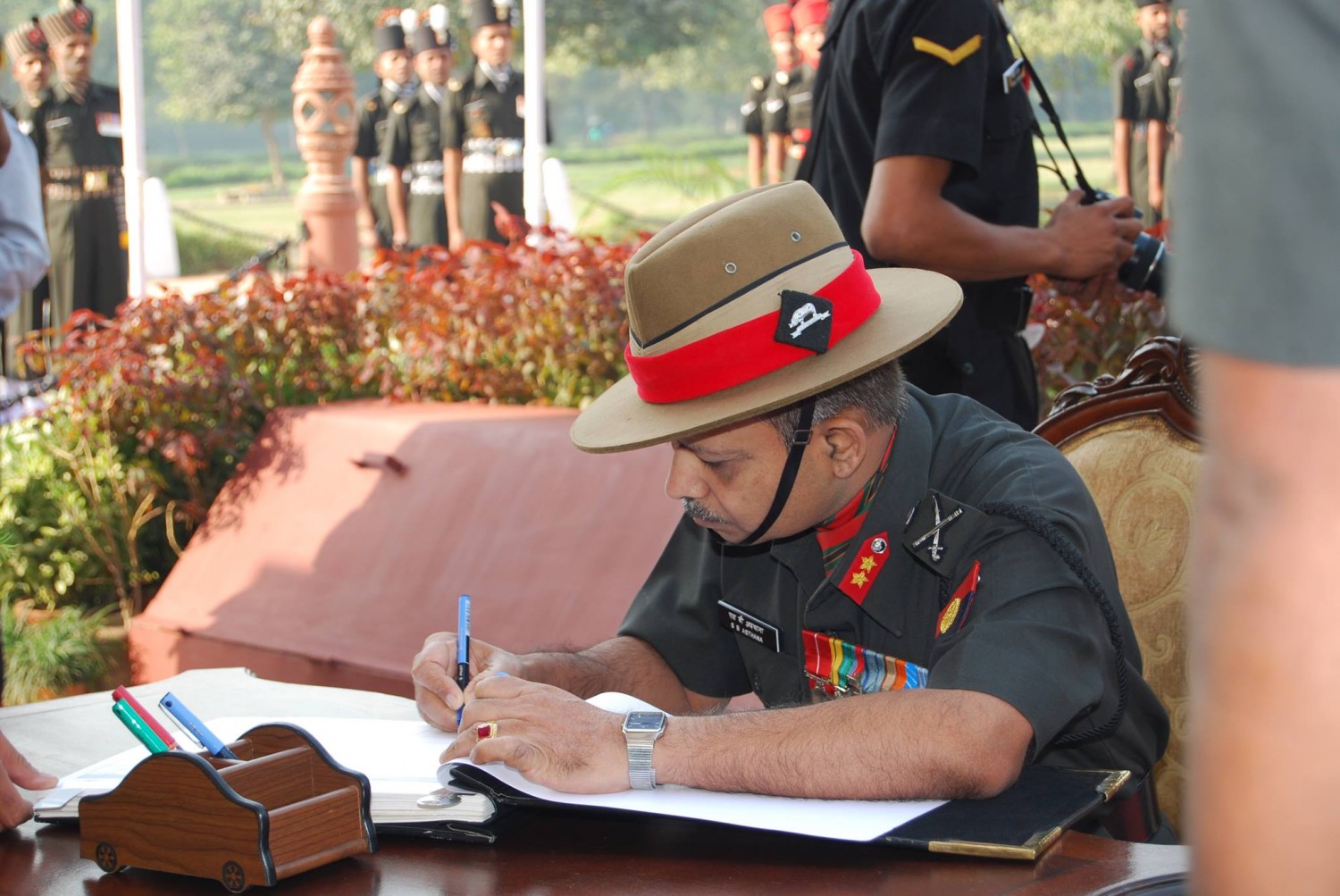
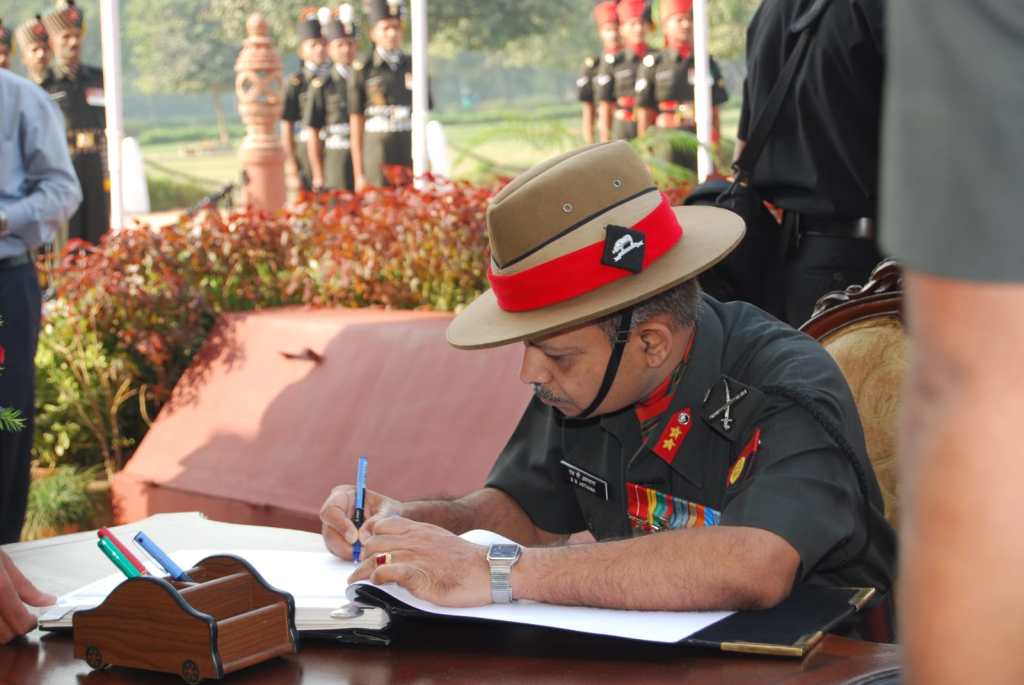
Major General Dr S B Asthana
US President Trump on taking over office was obsessed with imposing tariffs on everyone, because in his perception America was wronged by others imposing tariffs on them and India imposing high tariffs. He therefore went on a path to impose tariffs on everyone including India. This was followed by his untimely claim of stopping India Pakistan war post Operation Sindoor, which was denied by India. This presumably led to India being unfairly tariffed at 50 percent (One of the highest in the world. He expected that India will succumb to the pressure and give in to his demands like Japan, EU and others who offered zero percent tariff to him. India took a stand to protect its national interest and did not compromise in agriculture and energy sector as demanded by Trump.
Based on the tough stance of India, followed by Prime Minister Modi’s visit to China to attend SCO despite a long spell of difficult China India relations and the bonhomie displayed between President Putin, PM Modi and President Xi Jinping, made President Trump realise that his overdrive seems to have brought Russia, China and India closer and he may be losing out India to China by creating conditions for a mutual reset of their bilateral relations. His economic coercive overdrive posed a common challenge to the three countries and a reason to collaborate to tackle the “Trump Problem”.
Subsequent tariff war with China revealed that Beijing has great leverage over USA in terms of rare earth magnets and USAs capability to punish China is limited. China appeared to be a much strong competitor than what Trump originally thought. This reality check made him revisit the stance he took against India, and he felt necessary to give some compromising signals to India before the diplomatic divide becomes unmanageable with India. His backtracking to admit “I don’t think we have (lost India)” is an expression of revisited stance and strategic relevance of India.
India’s Geographical location is strategically very important as it dominates sea lines of communication (SLOC) and important maritime trade route through Indian Ocean. Chinese energy and trade flow depends on its SLOC, which are most vulnerable near Malacca Strait. USA’s Indo-Pacific Strategy acknowledges this reality. American strategists believe that India can play an important role in mitigating some of the its challenges emerging out of China. It is in this context, USA has found some relevance of India in last two decades, ever since China became a formidable challenge, as it records formidable growth in economy and maritime power. The idea of re-activating Quad in last two decades, conduct of joint Malabar exercises and many foundation agreements with India for technological co-operation indicate the pivotal position of India in US counter-China strategy for burden sharing and deterrence towards free and open Indo-Pacific and rule based order in the region.. India too needs USA, which is the largest trading partner of India, so far and also for some critical technologies and intelligence sharing. The relationship therefore is of mutual benefit.
The recent trade tensions and unfair/punitive tariffs have created a doubt about the reliability of USA as a strategic partner of India. US strategists view India as a crucial partner and democratic counterweight to China in the Indo-Pacific, urging New Delhi to uphold a free and open regional order. The National Security Strategy released by United States recently, indicates the importance of India for USA and the need to “improve commercial and other relations with India to encourage New Delhi to contribute to Indo-Pacific Security including continued co-operation in Quad”. However, the Trump Administration looks at India more as a diplomatic challenge to be used to its advantage underplaying its role as strategic partner with shared value and interest. Although USA will like to use India as a counterbalance to China, but given the India’s stance to act as per own national interest and successfully exercising strategic autonomy so far, Washington is not very confident that they will be able to manipulate India against China. America knows that India is unlikely to get into any formal alliance or play the role of proxy for them, and will continue multi-alignment and multi-engagement policy.
FPRC
Q 2. Did Beijing see in the breakdown of the India-US relationship an opportunity to drive a wedge and make the India-US security relationship more difficult and weaken institutions like the Quad?
Major General Dr S B Asthana
It is logical to presume that Beijing would view the ongoing strained relations between US and India as a golden opportunity to drive a wedge in the fragile Indo-US security relationship and weaken institution like the Quad. President Trump with his reckless unfair tariffs has dented the diplomatic effort of more than two decades between India and USA and posed some awkward challenges wherein having working relations with China has become a necessary and relatively more convenient option for India.
Although India and China continue to have their differences and mistrust between them but both seem to be working not to widen them to become disputes. President Trump’s actions have increased the issues of common interest between India and China like standing up against unfair tariffs and trade practices. The basic parameters due to which US and India felt the need to co-operate was free and open Indo-Pacific and rule based order there, to which China was perceived to be a threat by its aggressive actions and incremental encroachment. Under President Trump, the actions of USA in Venezuela, Iran can hardly be called as responsible or rule based. Its blockade of Venezuela goes against the idea of free and open oceans. His ideas on Greenland indicate expansionist design for which China alone was being criticised. Beijing naturally views these conditions as a chance to strengthen diplomatic and economic ties with India, presenting China as a partner in the struggle against economic pressure, tariff abuse, and the Trump Administration’s unilateralism.
For India, despite disengagement in Ladakh, the threat from China remains in absence of credible de-escalation, but it seems to be doing its best to pose itself as more accommodative neighbour to India. At Tianjin, Prime Minister Narendra Modi and President Xi Jinping portrayed both countries as “development partners, not rivals,” concurring that border management is essential to re-establishing wider cooperation and that disagreements shouldn’t escalate into hostilities. In an attempt to wean India away from American influence, Chinese acts such as easing some export restrictions and recognising LeT as a terrorist organisation (which was previously avoided) can be interpreted as some sort of accommodation towards improved relations. Resuming direct flights after the COVID-19 pandemic, loosening restrictions on visas, and increasing official-level communication channels all indicate a conscious effort to have amicable ties and a reset that will benefit both nations.
India’s position in Quad hasn’t changed much, but given the turbulence in relationship between US and others, the activities seem to be paused with uncertainty about future. Quad was never a military alliance, and there hasn’t been much advancement in non-military collaboration either. I see it as more of an interruption under Trump. China still poses a threat in the Indo-Pacific, therefore when Chinese aggression becomes intolerable for both the US and India, the Quad may be reactivated. That is also stated in the United States National Security Strategy, 2025. Since China is aware of its mistrust and differences with India, it is being realistic by applauding India’s strategic autonomy, delaying the Quad’s consolidation, and making sure India never explicitly aligns with the US against China
FPRC
Q 3. Do you agree that the recent meeting between US President Donald Trump and Chinese President Xi Jinping on the sidelines of the APEC Summit in Busan, South Korea, (30 October 2025 )and Trump’s use of the term “G2” to frame the gathering, has raised profound questions for India?
Major General Dr S B Asthana
The National Security Strategy of USA identifies China as the main competitor is a statement of fact which is unlikely to change in next few decades. The competition has grown into what I call as Cold War 2.0. The meeting of US President Donald Trump and Chinese President Xi Jinping on the sidelines of the APEC Summit in Busan, South Korea, on 30 October 2025, happened after several rounds of trade war and tariff bouts, technology controls and military posturing, when the two countries realised that being the two largest economies, highly dependent on each other, they need to find answers to escalating trade and tariff confrontations, before both sides suffer grave economic damages. I therefore, view this accommodation in the Summit as a damage control exercise not a permanent ‘Big Power Handshake” as many will like to project it.
President Trump’s informal use of the term G2 (meaning a group of two), and China’s happy embracement of this phrase suggested that the global governance in the 21st century will be dominated by US and China, in a new Cold War dynamics, wherein Cold War 2.0 will overshadow Cold War 1.0 between USA and Russia. It also indicated that both might seek issue based accommodation in trade, semiconductors, rare earth minerals, AI as well as global governance, sidelining allies and partners in their mutual interests.
While America China accommodation may be helpful to mitigate the ongoing trade and economic turbulence as well as global powerplay, it can well be a cause of concern for allies and partners of both/either of them including India. At the face value it can be construed that if US and China cooperate, it reduces the strategic relevance of India for USA, thereby shrinking the diplomatic space and straining the strategic autonomy of India. It might dilute Indo-Pacific pressure on China and further slow down the momentum of Quad. It reduces India’s leverage with both.
A developing India needs APIs, critical minerals, electronics and machinery from China and technology, financial capitol and consumer market of USA for optimum growth; hence, strategic balancing is a compulsion for its growth. A reset of China-USA reduces Indian relevance as balancer and a confrontation puts pressure on it to pick sides. In my opinion the Busan Summit is a mere temporary accommodation because the divergences of USA and China are quite formidable to forgo competition.
From Indian perspective it’s a reminder to speed up self-reliance efforts, continue multiple alignment and engagement to have variety of options for every possible scenario, have multiple partnerships/ coalitions (like Quad, BRICS, SCO), bilateral FTAs, and emerge as a strong partner of rest of the world other than G2 construct. It must increase its economic capabilities and strategic leverages to survive in a G2 Centric global order, which may/may not happen, if many middle powers assert themselves for multipolar order.
FPRC
Q 4. Do you agree with the view that India appears to be at a foreign policy crossroads, with a downturn in ties with the US?
Major General Dr S B Asthana
The ongoing tariff standoff triggered by President Trump imposing 50 percent tariff on India in August 2025, viewed as unfair targeting by Indians, his new found relevance of Pakistan, his unverified claims of resolving India Pakistan War despite repeated rebuttals by India have strained Indo-US relations to the lowest ebb in last two decades. As you pointed out in your question, these US measures have strategically placed India at a crossroads in its foreign policy. It has damaged the USA’s Indo-Pacific strategy against China by alienating India, a crucial Indo-Pacific partner. India seems getting closer to the Russia-China-India (RIC) alignment as a result of the punitive actions in order to confront President Trump’s impending tariffs and other issues.
The best course of action for India combines strategic signalling, economic realignment, and diplomacy. The secret is a selective trade agreement that maintains competitiveness while safeguarding sensitive industries. India has to increase domestic manufacturing, diversify its exports, and gradually decrease its dependency on Russian weapons and energy. Without hurrying into a bad agreement, India should endure the tariffs, till it gets a reasonable deal. In addition to broadening alternatives, it should safeguard MSMEs, agriculture, dairy, energy security, and affordability.
In order to keep its strategic decisions independent of any one state, India is diversifying, experimenting with new agreements and arrangements with Russia, West Asia, Europe, and the members of the Global South, and, if feasible, strengthening working ties with China. Even with the USA, attempts to maintain current defence logistics agreements, technology projects, and Indo-Pacific coordination are focused on treating the current turmoil as transient and problem-specific rather than causing long-term harm to bilateral ties. India can weather the storm for the time being with strategic patience, diversification, and astute negotiating.
Multi-alignment has already replaced non-alignment in Indian foreign policy thinking. Therefore, India’s foreign policy crossroads is how it strikes a balance between the Trump Administration’s immediate economic challenge and its long-term need for US technology, investment, and support in the Indo-Pacific, all without sacrificing its fundamental red lines on sovereignty and strategic autonomy.
FPRC
Q 5. India and China, the two major developing economies in Asia, should “firmly oppose” any form of tariff and trade wars and uphold the multilateral trading system. Do you agree?
Major General Dr S B Asthana
I agree that in order to maintain an open, rule-based trading order and fight unjust unilateral tariffs and trade restrictions, both China and India should strongly resist unilateral economic coercion by USA. Both Chinese and Indian statements have consistently denounced US tariff increases as violators of WTO regulations and emphasised that the largest economy’s unilateral export restrictions disrupt free-flowing markets and unfairly harm developing nations. It makes sense for both China and India to oppose such economic unilateralism since they would be among the biggest losers in a scenario of excessive protectionism and WTO collapse.
A unified response against the USA is doubtful given certain basic differences between China and India’s domestic priorities and the fact that China is also accused of unfair market practices and significant industry subsidies. Although it seems appealing, the idea of a coordinated BRICS response has not yet gained traction. While measures like alternative payment methods, such as rupee-ruble trading, are being tried, intra-BRICS trading ($700 billion) is insignificant compared to the $5 trillion total of BRICS countries’ independent trade with the United States, which gives later the confidence and leverage.
However, if Trump follows through with extra penalties on countries trading with Russia, in case of breakdown of recent peace talks on Russia-Ukraine War, he may unwittingly force BRICS closer. Additionally, a realignment towards the RIC framework and coordinated response could be sparked by this. It should be noted that Germany has so far requested a waiver of the new oil restrictions, but neither China nor India have. This suggests that both nations are determined to combat unfair tariffs and coercive trade.
China and India have also responded to the US trade war with retaliatory charges and WTO lawsuits against US steel and aluminium tariffs. Promoting WTO reform, re-establishing a functional dispute-settlement mechanism, and opposing unilateral sanctions while pledging to increase domestic market access, transparency, and subsidy restraint will be the most credible positions for both. This strategy enables them to maintain a multilateral trading system that is essential to their long-term growth and worldwide influence while simultaneously defending room for development and strategic autonomy.
Major General (Dr) S B Asthana,SM,VSM,PhD (Veteran)
(The views expressed are personal views of the author, who retains the copy right. The author is a Globally acknowledged Strategic and Security Analyst, He can be reached at Facebook and LinkedIn as Shashi Asthana, @asthana_shashi on twitter, and personnel site https://asthanawrites.org/ email shashiasthana29@gmail.com LinkedIn Profile www.linkedin.com/in/shashi-asthana-4b3801a6. Youtube link https://www.youtube.com/channel/UCl50YRTBrOCVIxDtHfhvQDQ?view_as=subscriber
 Asthana Writes